
„Transformatives Lernen in Krisenzeiten – Compassion als integrativer Ansatz für Frieden und Nachhaltigkeit?!“ (Universität Bonn, 15.–17. Oktober 2025)
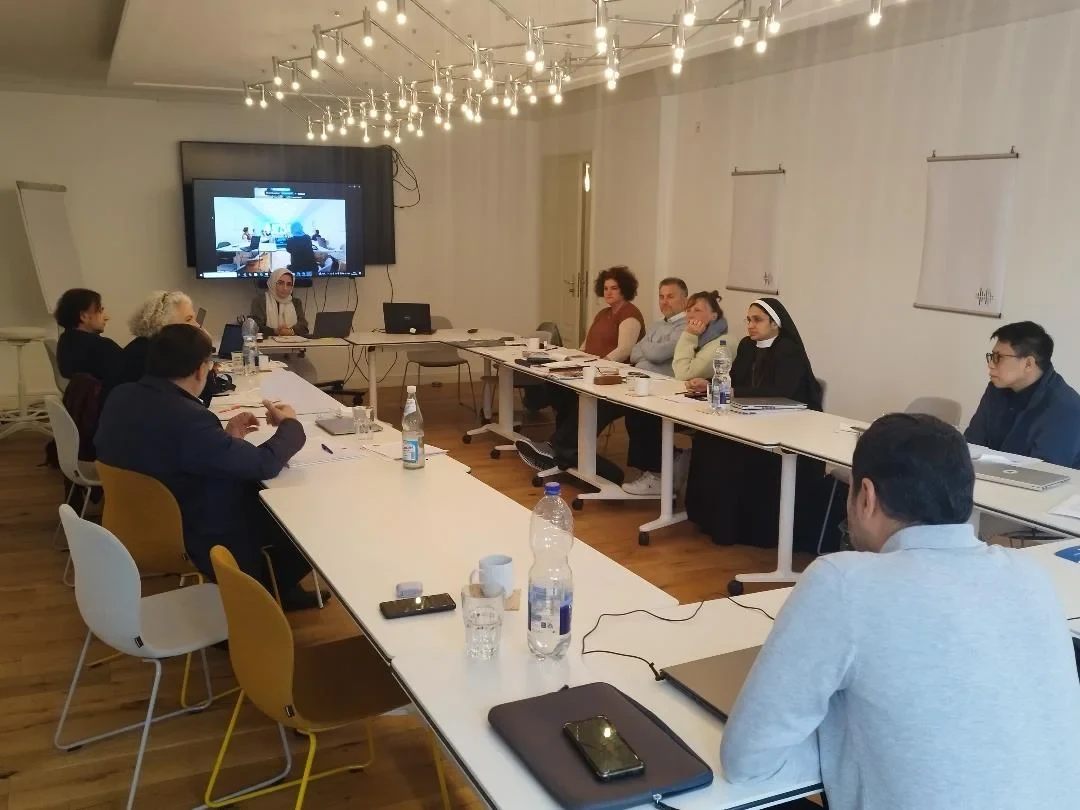
Vom 15. bis 17. Oktober 2025 fand am Impulse Center („Ermekeil-Villa“) der Universität Bonn die internationale, interdisziplinäre und interreligiöse Hybrid-Konferenz „Transformatives Lernen in Krisenzeiten: Compassion als integrativer Ansatz für Frieden und Nachhaltigkeit?!“ statt. Forschende und Bildungsexpertinnen und -experten aus Europa, Afrika und Asien – teils vor Ort, teils online zugeschaltet – diskutierten, wie Compassion, verstanden als empathische und handlungsorientierte Mitverantwortung, theoretisch fundiert und praktisch in Bildungs-, Friedens- und Nachhaltigkeitskontexte eingebunden werden kann.
Besonderes Augenmerk lag auf der Frage, wie compassio-orientierte Ansätze in konkrete Bildungsprozesse überführt werden können: von der religionspädagogischen Vermittlung interreligiöser Anerkennung über ecofeministische Lesungen heiliger Texte bis hin zu innovativen digitalen Projekten wie „TheologiKI“. Die Diskussionen verdeutlichten, dass Compassion als transformatives Bildungsprinzip dialogisches Lernen fördert, Grenzen zwischen Religionen, Kulturen und Disziplinen überwindet und neue Perspektiven für eine gerechtere und nachhaltigere Welt eröffnet.
Die Konferenzergebnisse zeigen, dass Theorie und Praxis der Compassion zunehmend als Schlüsselkonzept für Friedensbildung, soziale Transformation und nachhaltige Entwicklung in der internationalen Wissenschaftslandschaft wahrgenommen werden.
“Transformative Learning in Times of Crisis – Compassion as an Integrative Approach to Peace and Sustainability?!” (University of Bonn, 15–17 October 2025)
From 15 to 17 October 2025, the international, interdisciplinary, and interreligious hybrid conference “Transformative Learning in Times of Crisis: Compassion as an Integrative Approach to Peace and Sustainability?!” took place at the Impulse Center (“Ermekeil-Villa”) of the University of Bonn. Scholars and educators from Europe, Africa, and Asia – participating both in person and online – explored how compassion, understood as empathic and action-oriented responsibility, can be theoretically grounded and practically embedded within educational, peacebuilding, and sustainability frameworks.
Particular attention was given to translating compassion-oriented approaches into concrete educational practices: from interreligious recognition within religious education to ecofeminist readings of sacred texts and innovative digital projects such as “TheologiKI.” The discussions highlighted that compassion, as a transformative educational principle, fosters dialogical learning, transcends religious, cultural, and disciplinary boundaries, and opens new perspectives for a more just and sustainable world.
The outcomes underscored that the theory and practice of compassion are increasingly recognized across the international academic landscape as key concepts for peace education, social transformation, and sustainable development.